
Summer Smile


Whats included in the deal?
Save €1380
Unlock even more savings with a 20% refund through the Med 2 form,
putting an extra €840 back in your pocket
Fixed appliances or ‘Train Track’ braces
are the most conventional and common
type of orthodontic braces.
These traditional braces are composed of small metal or clear ceramic brackets
that are placed on the teeth and are connected by metal orthodontic wire. This
system allows controlled tension to be applied to the teeth gradually, allowing
them to be moved into their optimal position and alignment.
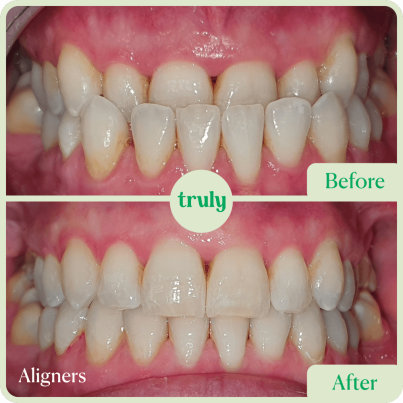
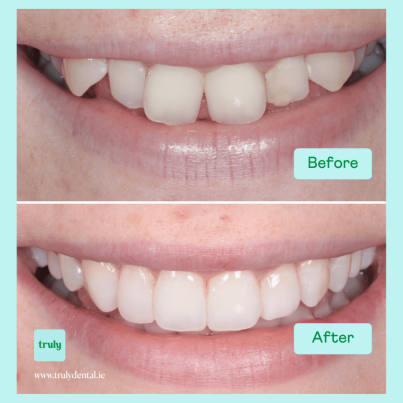
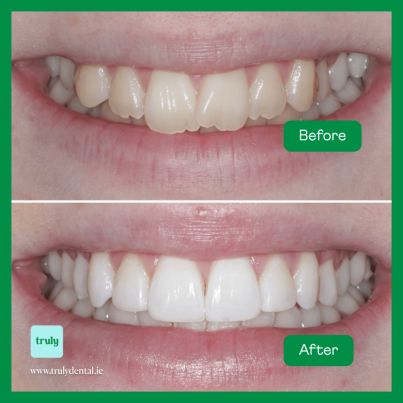
Braces can correct problems with
teeth caused by a number of
different factors:

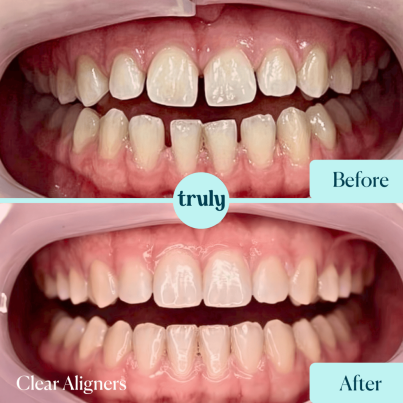
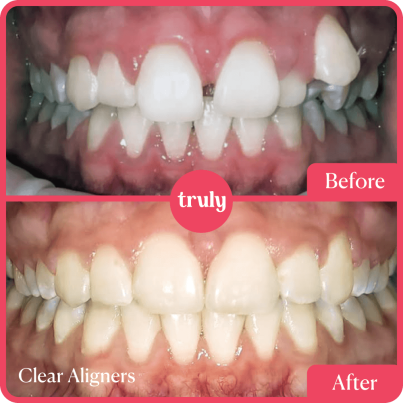
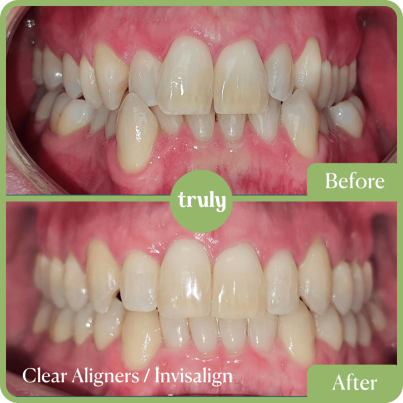
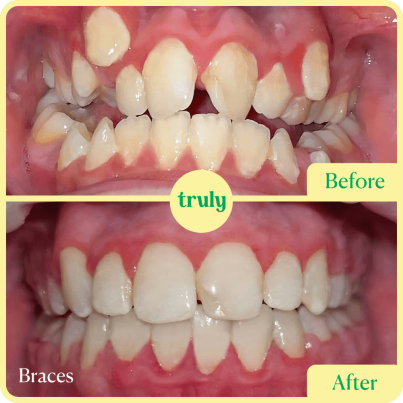
Questions? Answers
Is it worth getting braces as an adult?
It is never too late to improve the health and appearance of your teeth with corrective straightening, and you can successfully and safely get braces at any age. While some people associate Train Track braces with pre-teens and teenagers, this is largely a result of the fact that traditional orthodontic techniques and technology took advantage of the relative ease of applying directive pressure to the bones of the jaw and face while the patient is still developing to correct positioning and alignment issues feasibly and efficiently when it was most easily done, as children.
Happily, adult orthodontics has come on in leaps and bounds and today is an extremely common practice, clearing the path for almost every patient to have the straight teeth they have always wanted. Indeed, we frequently carry out orthodontic treatment on adult patients - including those who never had the chance to avail of braces previously - as these advances in modern dentistry have resulted in equally effective and successful straightening using braces regardless of a patient’s age.
Why do I have to have X-rays taken before getting braces?
Your dentist will need to take a dental X-ray at your initial consultation to ensure that a full picture of your exact teeth positioning, alignment, and angling in relation to your jaw is available for evaluation. This complete view is essential for your dentist to assess the necessary stages and process of your treatment plan, and give you an accurate estimate of the total length of your braces treatment. The cost of this X-ray is included in the overall cost of your chosen treatment and payment method.
What are the pros and cons of metal braces?
The advantages of metal, fitted, or ‘train track’ style braces include:
- More durable and sturdy than ceramic braces, which typically results in far fewer uncomfortable breakages
- Ease of keeping them clean; due to the material and robustness of metal braces it is often easier for patients to maintain sufficient, vigorous cleaning habits
- Stain resistant; for those patients who are fans of more staining foods and drinks (such as tea and coffee, or spicy food) the greater resistance of metal braces to staining and discolouration is a big plus
The major drawback of metal braces is their visibility – in comparison to ‘train tracks’ with ceramic finishing or other forms of orthodontics, which can be ceramic tooth-coloured or clear braces, metal Train Track braces are relatively noticeable to others.
Due in part to the increasing rate and popularity of making investments in our oral health and appearance well in adulthood, it has become far more commonplace and widespread to see people of all ages embracing ‘train track’ braces as the effective solution to problems caused by crooked, misaligned, or gapped teeth that they are.
Are train track braces better than Invisalign?
We understand that our smiles are one of the first things others notice about us, and the actions we need to care for and protect our teeth need to fit consistently and reliably into our day to day lives. Similarly, no two patient cases are ever exactly the same. Therefore there is no one size suits all approach to braces, and no good dentist will give you a blanket recommendation for one technique or approach to correcting and aligning teeth over another.
The end result of your treatment will be the same whether you use Train Track braces or Invisalign – that is straighter, healthier teeth that you can be confident in. You can find more information about our Invisalign treatment system here. Wwhen you’re ready to book your first consultation with one of our specially qualified dentists they will be delighted to discuss all of the factors of your specific situation including your smile goals, dental needs and issues, your lifestyle and time commitments, even your budget, to help you choose which option is best for you.
What should I do if my brace breaks?
While certain breaks of any of the components of your braces can be somewhat uncomfortable or painful, there is no need to panic if your braces do break between any of your routine check-ups.
If a bracket or any part of your brace breaks you should contact the clinic and we will arrange an appointment for you to get it repaired as soon as possible.
How do I clean my braces?
It is vital to maintain excellent oral hygiene while wearing your Train Track braces to safeguard your general oral hygiene and health, as braces can block food from naturally escaping your teeth after eating, meaning small bits of food can easily get caught.
Brushing your teeth after every meal will prevent this collection of any food particles between your braces and teeth and so prevent the build-up of plaque and decay which can result. It is also important to use interdental brushes for this reason, as you won’t be able to reach and clean properly between your teeth using regular floss. Our dentists also recommend the daily use of a fluoridated mouthwash while you are undergoing orthodontic treatment with Train Track braces.
Do I need to avoid certain foods?
Yes, to minimise breakage of your braces you will have to avoid certain foods. Specifically sticky and hard food such as crunchy bread, apples, chewing gum, toffee, and nuts should be avoided altogether, and of course if there are any specific foods you are unsure about you can check with your dentist at any of your regular check-ups. To maintain the general health of your teeth you should also avoid or limit your consumption of sugary foods while you are wearing braces.
One of the major benefits of metal Train Track braces over those with ceramic, tooth-coloured brackets is the reduced risk of staining – metal braces are far more stain-resistant than clear ceramic-finished braces. However if you have chosen ceramic braces it is advised to reduce your consumption of highly pigmented spiced foods, tea and coffee, and red wine. Fixed ceramic braces are also not suitable for people who smoke, as smoking will very rapidly cause severe staining and discolouration of your brace.
Are there any risks to getting Train Track braces?
As with all intensive and complex long-term dental treatments, there can be risks to taking corrective action to straighten your teeth using braces if you do so improperly or without following exactly your responsible dentist’s care instructions and advice:
- It is vitally important to avoid or limit your consumption of sugary foods and drinks and to maintain excellent brushing habits while you are wearing braces, as a failure to do so can lead to the build-up of plaque and tooth decay that can easily spread all around the braces. This can appear at the beginning as decalcification (a permanent white mark or discolouration on the affected tooth) but that can quickly begin to turn yellowish and then brown, with cavities appearing in the affected spots in as little as 8 weeks. Even when caught in time, your dentist will likely need to remove your braces before your desired alignment has been reached, for treatment of any decay to be carried out, and there will likely be permanent staining of your teeth.
- During all orthodontic treatment with any kind of braces, an effect known as resorption, or root shortening, takes place. This is where a small change in the length of a tooth’s root is noted, and is in the vast majority of cases so small a change as to have no effect on the health of the tooth. However in rare cases, somewhat more common if there has been significant trauma to your teeth or if this is your second course of orthodontic treatment in your life, the root shortening can be more pronounced and your braces treatment course may need to be altered or stopped prematurely to protect the long-term health of your teeth. This rare and unfortunately unpredictable complication will be monitored for closely by your dentist for the duration of your treatment.
Will my teeth stay straight after I stop wearing braces?
Once you have fully completed your orthodontic treatment and your Train Track braces have been removed, your dentist will fit you with a suitable retainer – both fixed and removable options are available.
Following straightening and correcting of a patient’s teeth with braces, wearing your retainer correctly is the best protection your newly straightened smile has to stay just as it is. Your dentist will advise you during your final appointment to remove your braces and have your retainer fitted, how long exactly you should continue to wear it full time (although a typical duration is approximately 3 months) after which most patients are generally safe to switch to wearing their retainer only overnight for a further identified period of time, or for life.
It is important to maintain regular, 6-monthly dental appointments following your treatment with braces, to ensure that you are staying on top of your overall oral health and meeting any potential issues before they can get out of hand. There is nevertheless a natural tendency in all of us for our teeth to become crooked as we age, particularly affecting the lower six front teeth due to the typical shrinkage of the lower jaw gradually over time. However, wearing your retainer indefinitely and correctly will do a lot to help minimise this natural process.
What are the benefits of train track braces?
'Train track' braces fix a wide range of complex orthodontic problems, including:
- Overjets – upper teeth protruding over the bottom teeth, which can cause bite problems such as difficulty with chewing or drinking, in addition to affecting the patient’s appearance
- Diastema - overly spaced out teeth, often referring to a large gap between the two front teeth
- Crossbites – misalignment of the top and bottom rows of teeth meaning they fail to come together or bite in the correct position
- Correcting crooked or overlapping teeth decreases pressure on the jaw, and straight, regular teeth are easier to clean, improving the upkeep of thorough oral hygiene habits and reducing the risk of future dental disease
- Patient choice and customization; choose between the discreet, tooth-coloured brackets or embrace the style of metal finishing and different coloured bands
- Enhance your appearance and smile with greater confidence without invasive or additive dental work – braces gently re-position your teeth to unveil your beautiful, natural smile
- Eliminate the risk of catastrophic dental injury due to protruding teeth
Affordable, cost-effective treatment alongside a host of available payment plans make conventional braces treatment accessible on all budget
Book your FREE consultation
Modern Dental Care in the heart of Dublin.
36-37 Dame Street
Dublin 2, D02 EF64
Opening hours
- Mon — Fri8 am - 8 pm
- Sat11 am - 6 pm
- Sun9 am - 6 pm
